 Nilkanthdham
नीलकण्ठधाम · पोइचा
Nilkanthdham
नीलकण्ठधाम · पोइचा
The Sadavrat seva serves daily meals at the dham and extends care along nearby routes when parikramavasis, sadhus, families and village communities need support.
Hot prasadam and water for travellers on the Narmada route.
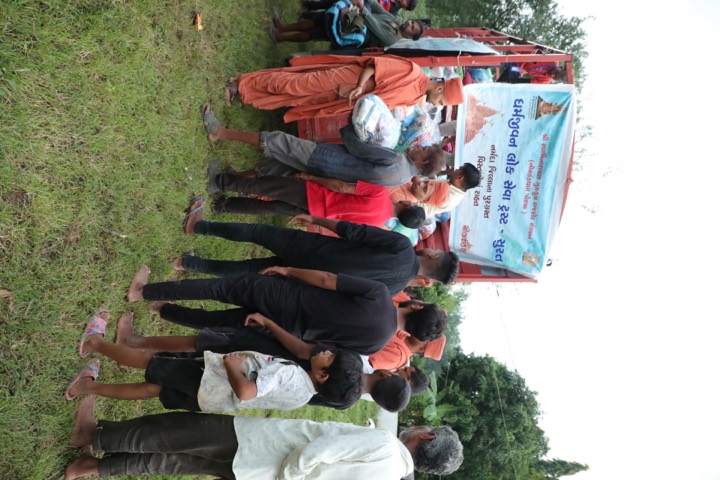
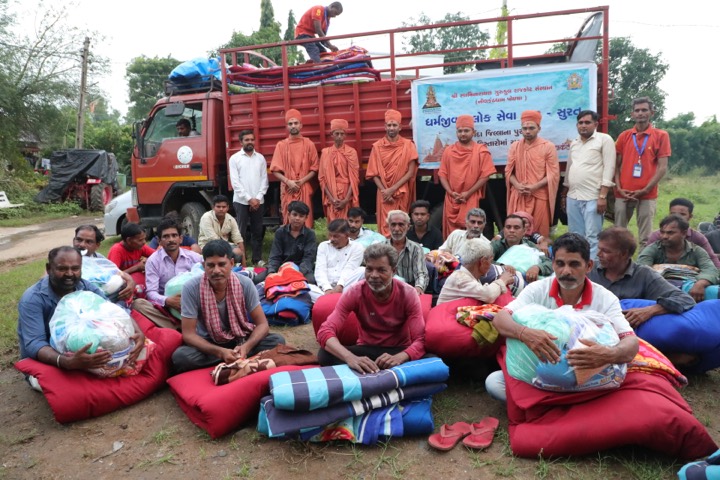
Rasoi teams and sevaks coordinate field support when relief is needed.

Nilkanthdham cooperates with local farmers to use cow waste from Gaudham productively: panchagavya inputs, compost, jeevamrut and training that reduces chemical dependency.
The tutelage centre offers 3-day and 7-day residential courses covering jeevamrut and beejamrut preparation, acchadan (mulching), waaphasa (moisture management), desi seed selection, and intercropping. A six-acre demonstration farm is maintained on the campus. Farmers leave with their own starter kit of panchagavya and seeds.
Enrol in a course →



Three pillars of unbroken seva
आदिवासी उत्थान · चिकित्सा · सदाव्रत
Education for every tribal child
Free residential education at the Sanskrit Gurukul, mobile literacy camps in neighbouring villages, vocational skills training and annual community festivals for tribal families.
Free care, when it's needed
On-campus dispensary, periodic specialist camps (eye, dental, orthopaedic), free medicine distribution, and ambulance service that can reach Vadodara hospitals in 45 minutes.
A food-line that has never closed
A continuous food-line for parikramavasis walking the Narmada, wandering sadhus, and anyone in need. Since pratishtha, the sadavrat has not closed — three meals a day, three-hundred-and-sixty-five days a year.
Clothing with dignity
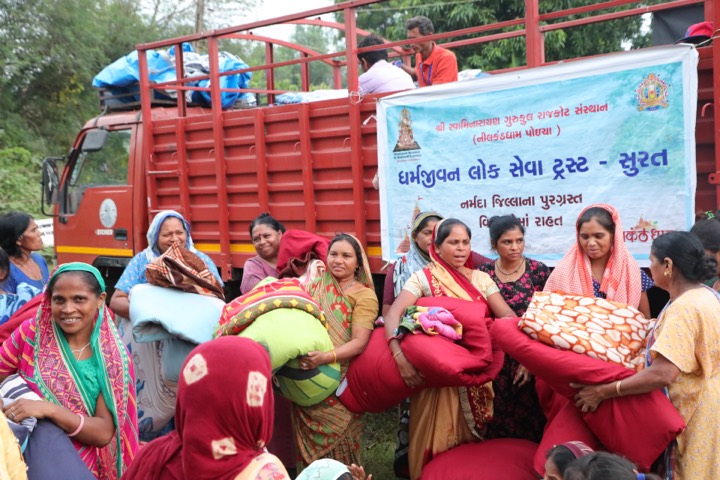
Seasonal clothing drives serve tribal families, parikramavasis and nearby village communities with clean, usable garments distributed respectfully.
Stay, food and medical assistance
Parikramavasis receive food, rest support, basic medical help and local guidance so the sacred Narmada walk can continue with care.
Support during natural calamities
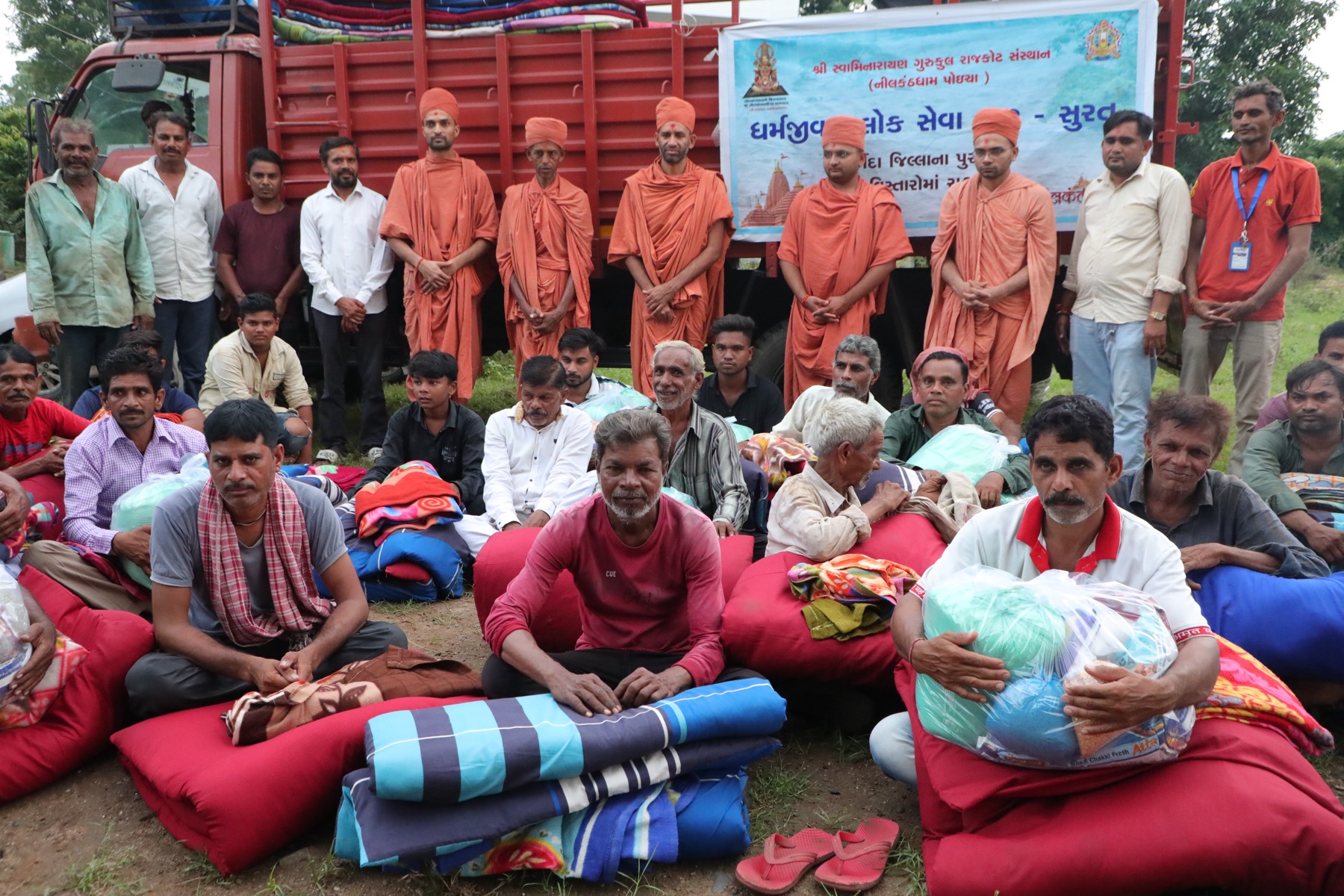
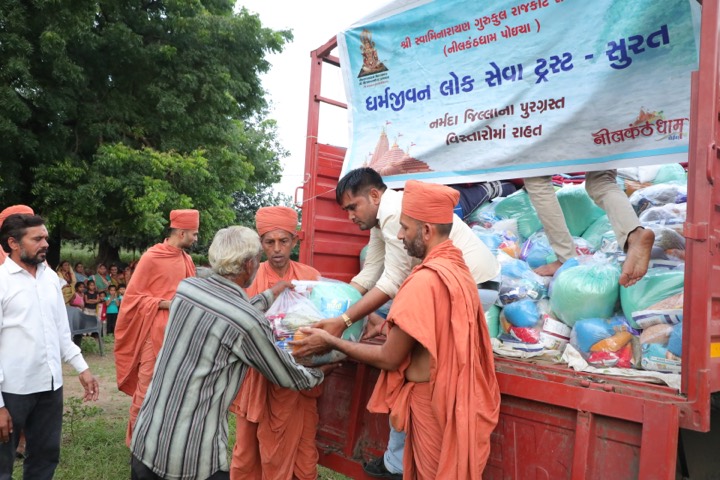
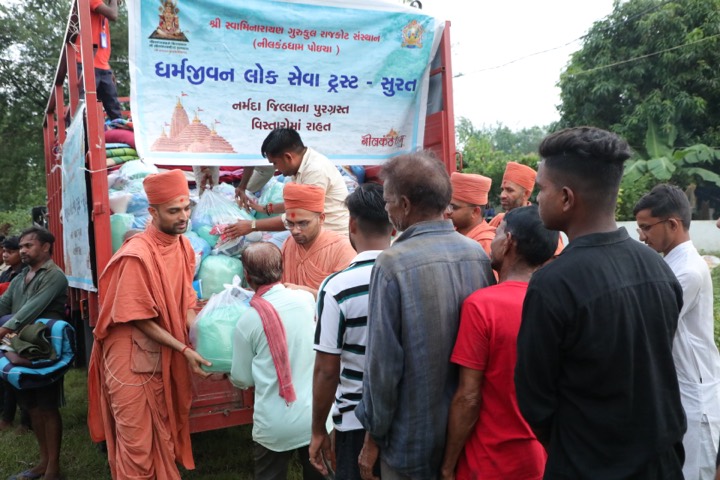
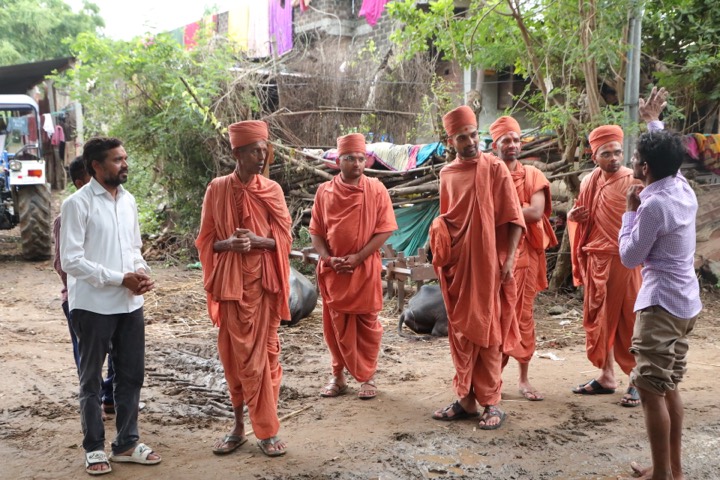
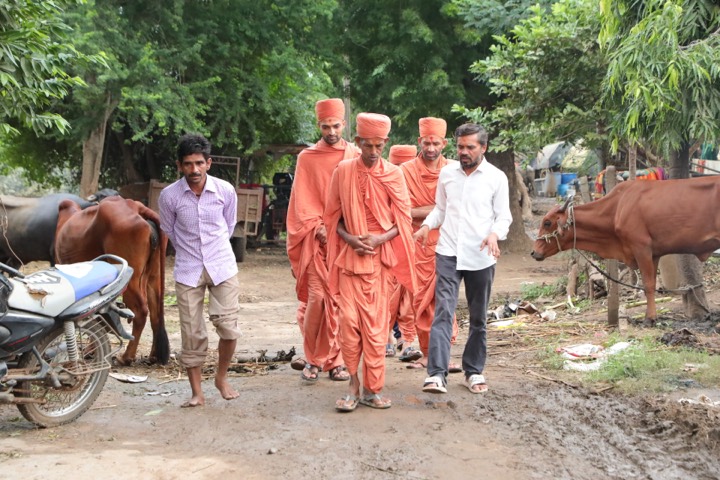
During floods, heat waves or local emergencies, the Sansthan coordinates essential kit distribution for affected families.