 Nilkanthdham
नीलकण्ठधाम · पोइचा
Nilkanthdham
नीलकण्ठधाम · पोइचा
Nilkanthdham's bhakti is not bound by the mandir walls. It walks the lanes of Poicha on nagar yatra, it echoes in the Sunday sabha, it murmurs in the Akhand Dhun — a continuous stream of devotion.
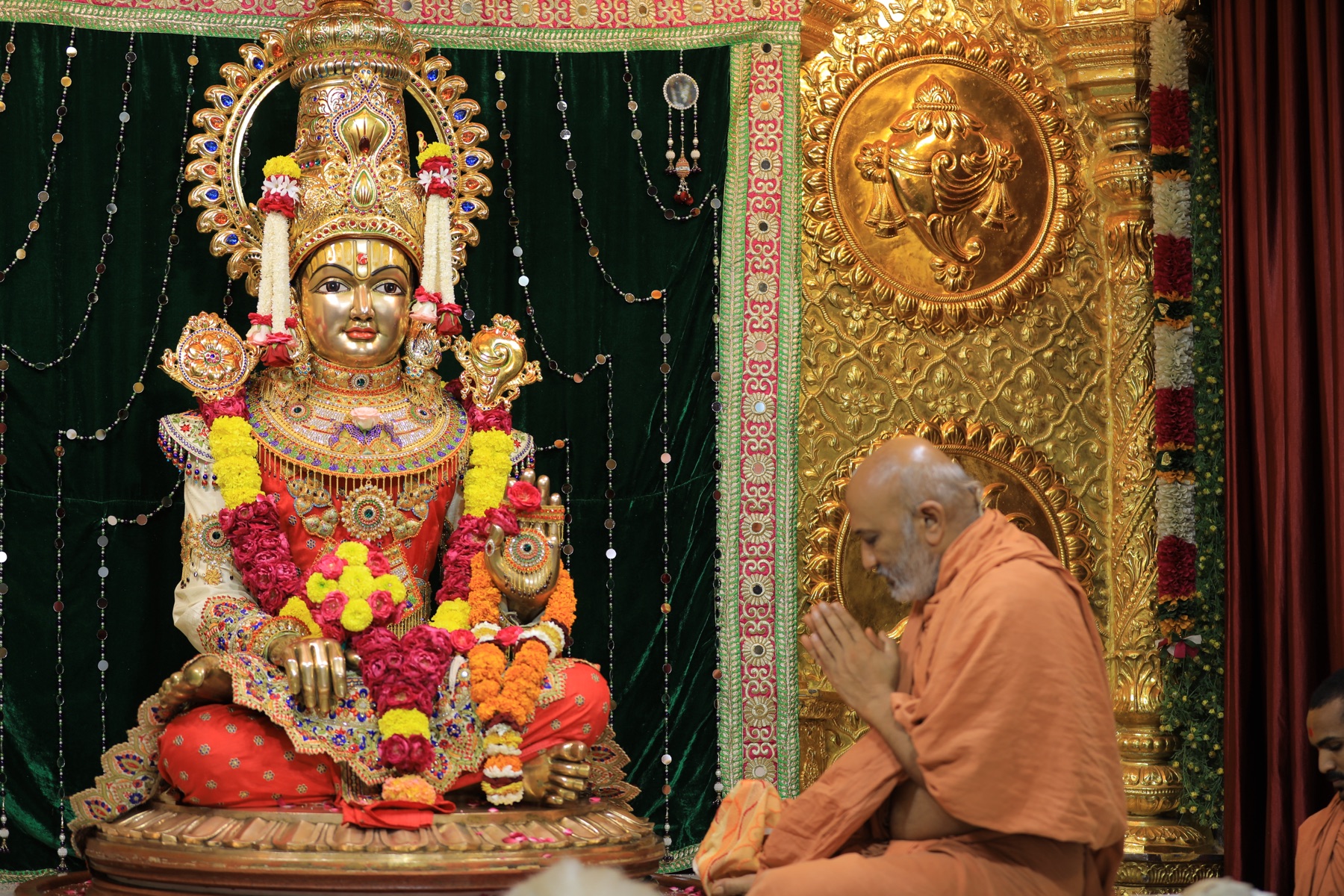
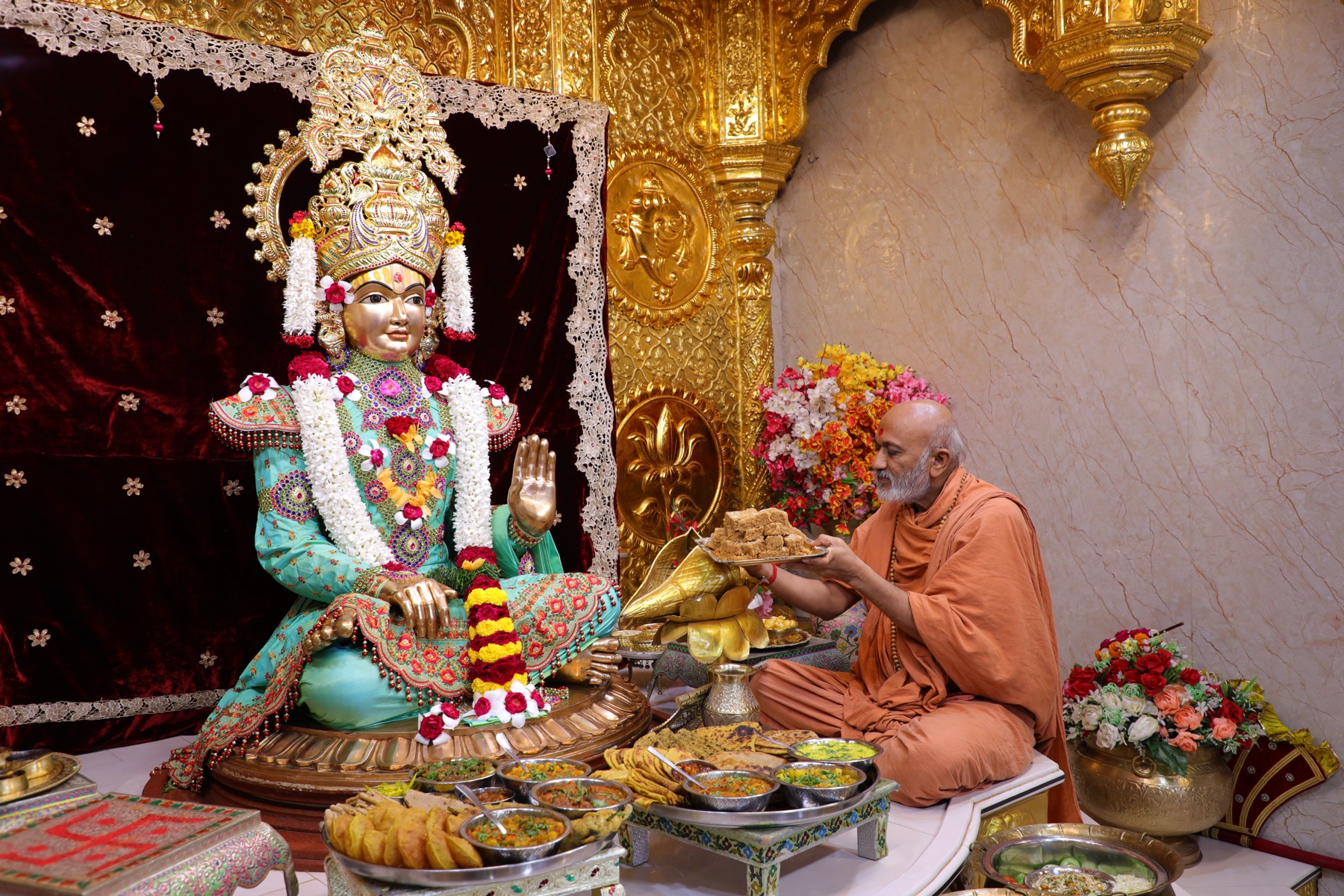
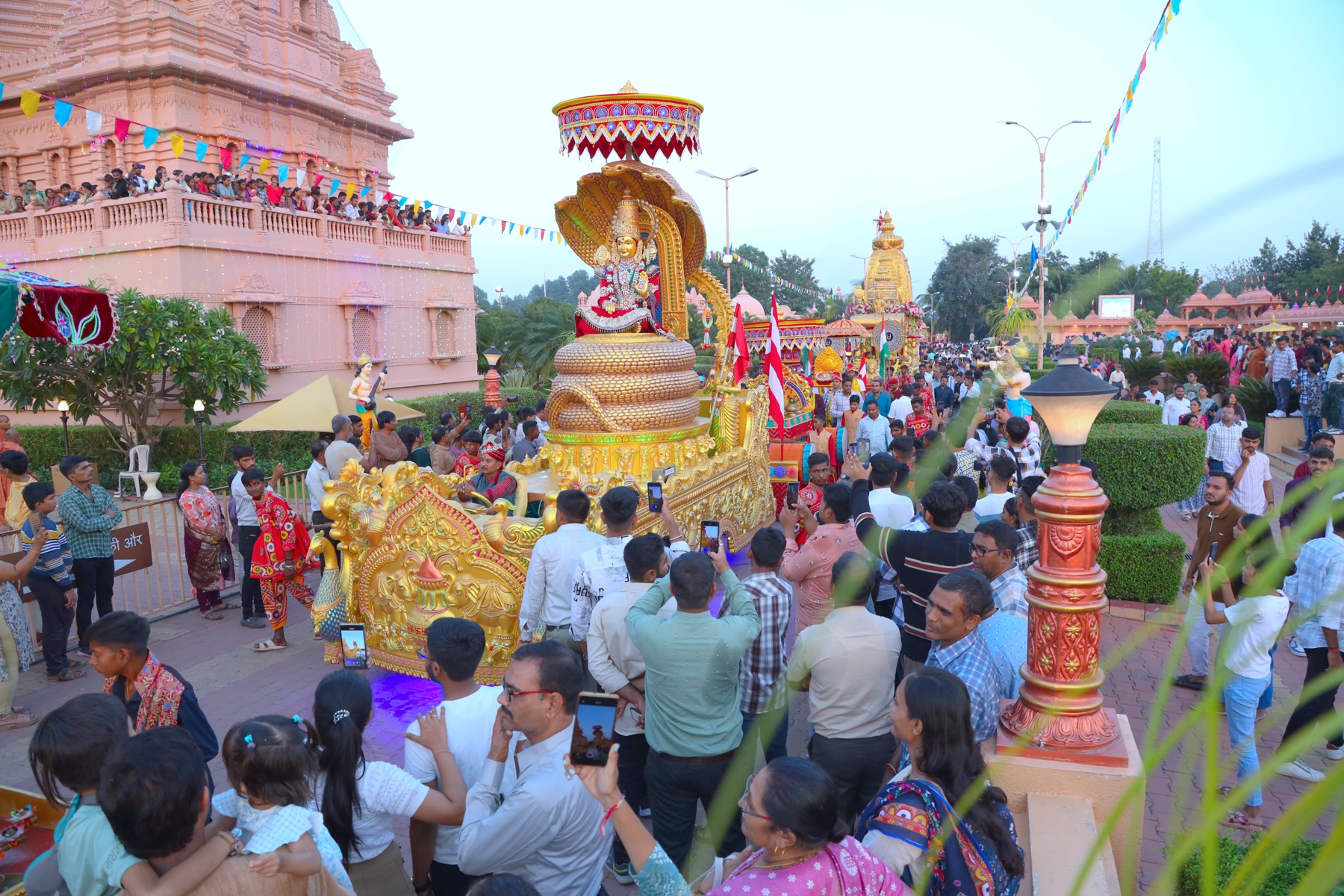
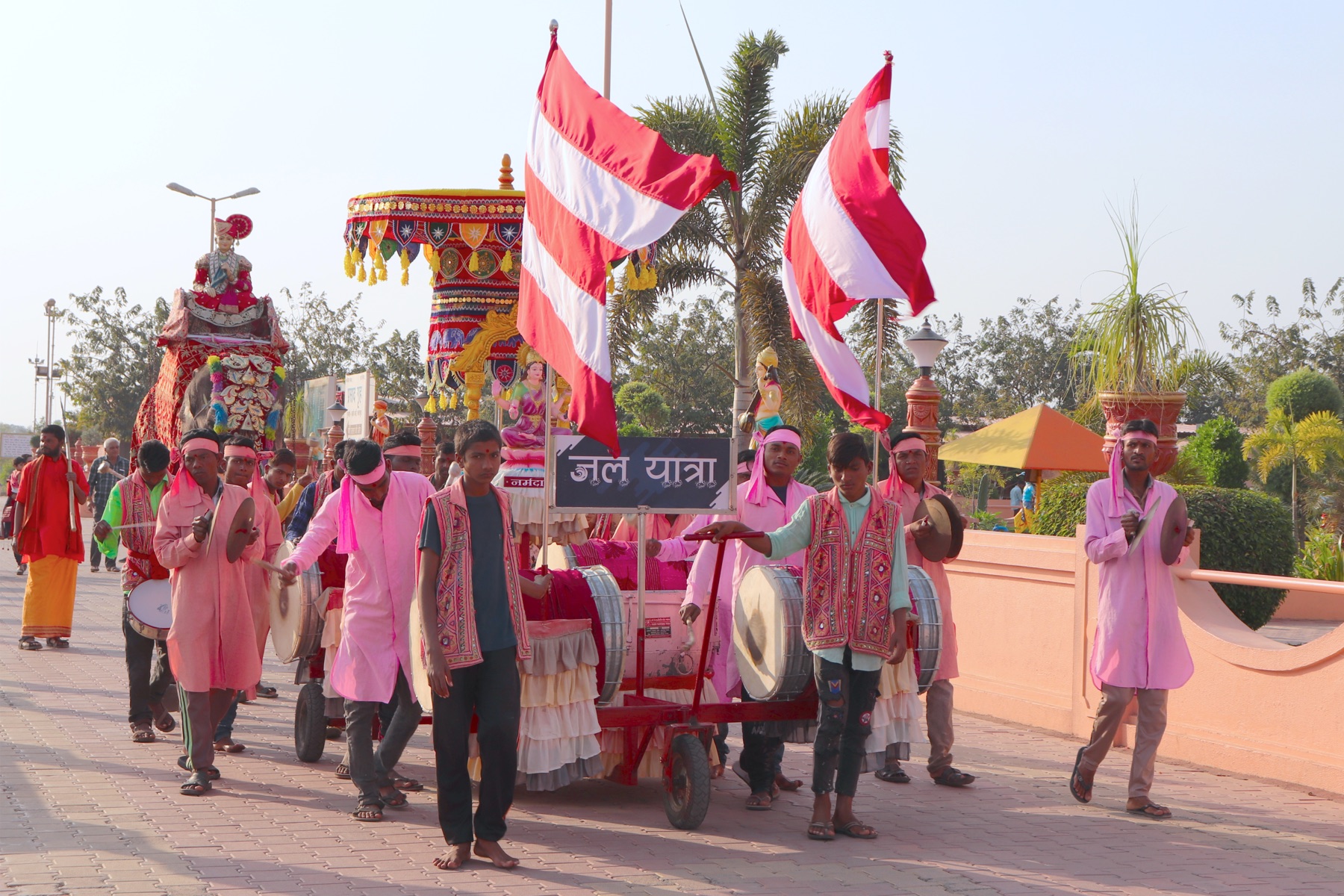
Once a month — and on every major festival — a utsav murti leaves the mandir on a decorated palki, carried through the streets of Poicha by devotees in procession.
The nagar yatra is how Bhagwan visits His devotees in their own lanes. Villagers line the route with rangoli, flower petals and aarti thalis. Children ride the tractor cart that carries the dhol and sankirtan mandli. Every household along the way offers prasad to the procession.
Kalash & Palki Labh →— मौन, नित्य रूप
Inside the Dhun Mandir, the Swaminarayan mahamantra has been chanted without a single minute's break — day and night — since the mandir's pratishtha.
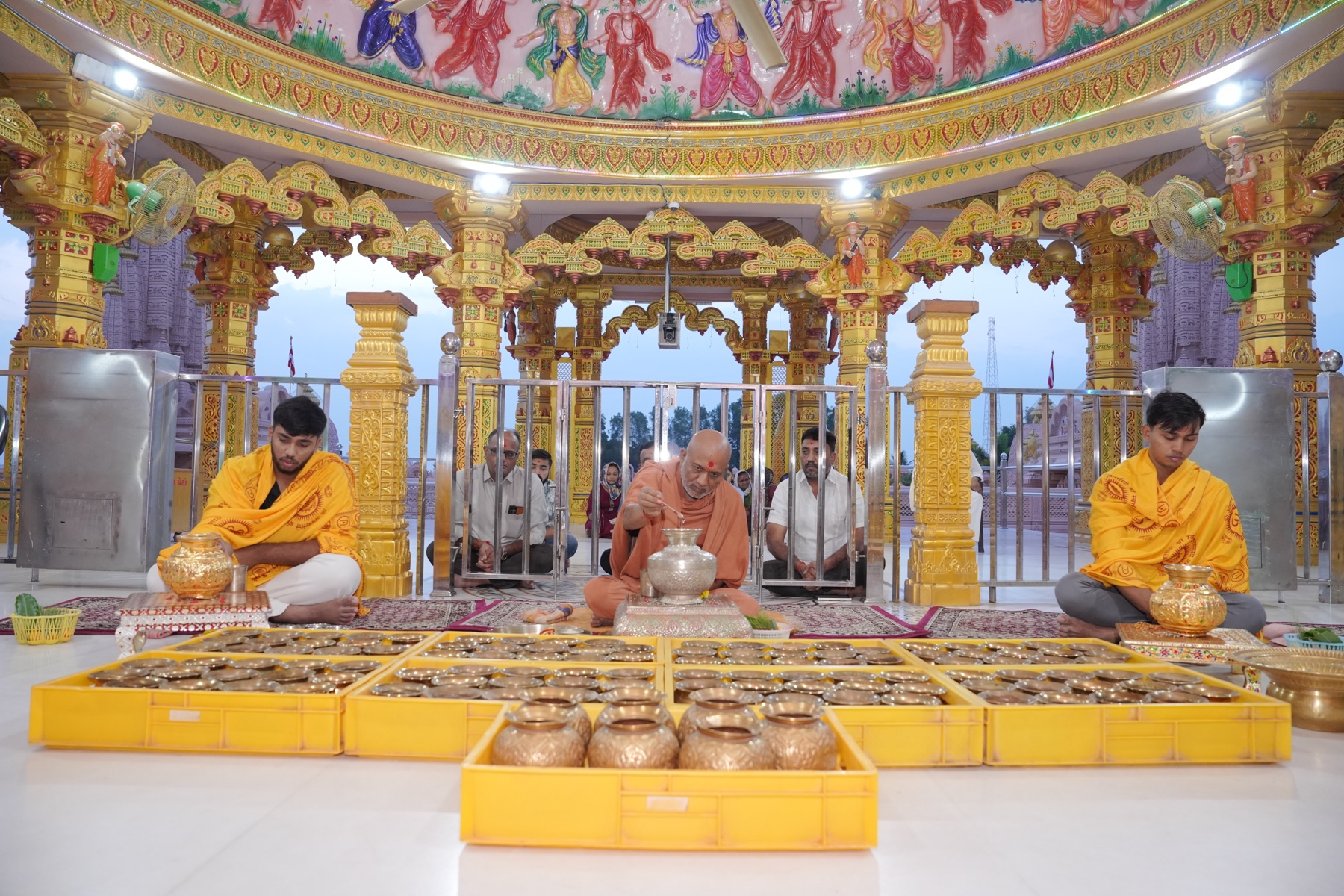
Daily yagna seva continues in the Nilkanth Yagna Shala and Maruti Yagna Shala with trained bhudevs and sankalp-based participation.
Scriptural chanting and samhita path are offered in the mandir routine for shanti, utsav sankalp and family remembrance.
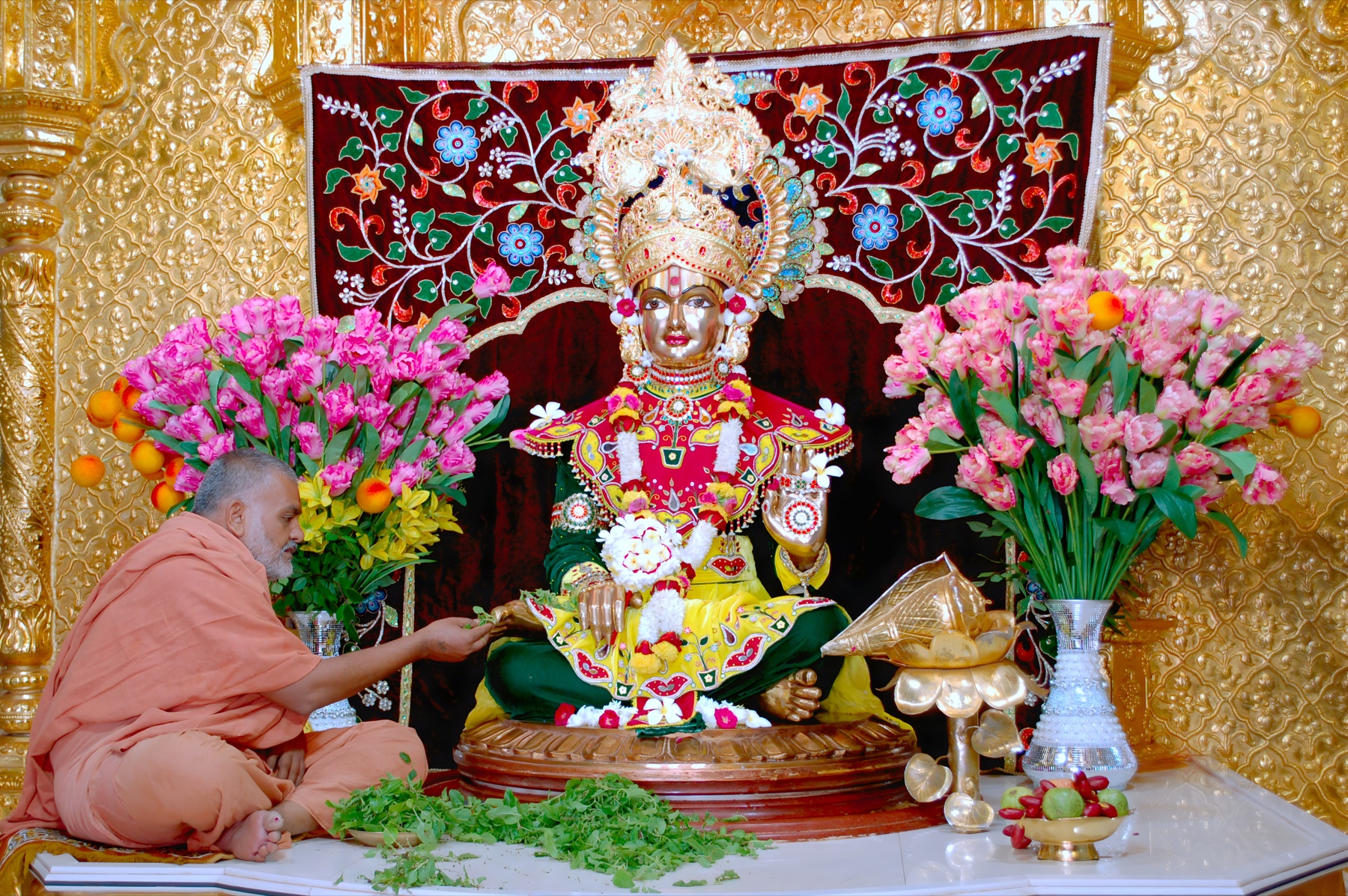
Shodashopchar poojan is performed by saints and brahmins; Panchopchar Poojan lets devotees personally offer simple worship.
Devotees may perform charan abhishek through the day and receive prasad after their sankalp.
Families can offer shakar tula for children as a joyful thanksgiving and prasadi seva.
Oil abhishek to Kashtbhanjan Dev is available for devotees seeking strength, protection and sankalp-prarthana.
Banyan-tree poojan is offered for pitra shanti and remembrance of departed family members.